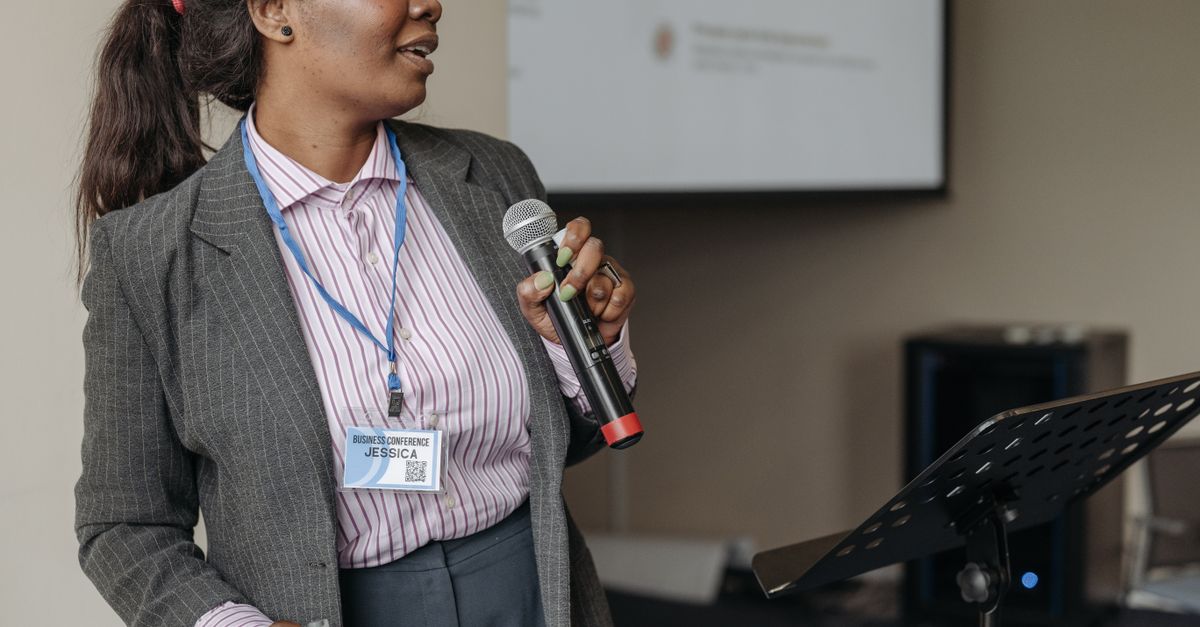
What a Keynote Speaker for an Annual Convention Is
A keynote speaker for an annual convention is a professional who specializes in designing and delivering high-impact presentations to corporate audiences at yearly events, with the central purpose of aligning teams with the organization's strategy, reinforcing company culture or triggering collective behavior change. Unlike an academic presenter or a generic motivational speaker, the annual convention speaker adapts the content to the specific moment the company is going through (year-end close, strategy launch, cultural transformation) and designs the intervention so the message lasts beyond the event itself.
Why the Choice of Speaker Determines the Convention's Return
Annual conventions are a considerable investment: logistics, travel, lodging, audiovisual production and attendees' productive time. According to the Global Business Travel Association (GBTA), the average cost per attendee at a one-day corporate event in Latin America ranges from 800 to 2,400 US dollars when all items are included. In that context, the speaker is not an accessory expense but the main lever for the event's return on investment.
Kirkpatrick Partners research on learning effectiveness in corporate settings indicates that only 15% of participants at a one-day event remember the core content 72 hours later if there was no deliberate teaching structure. A speaker who applies instructional design and behavioral science principles can raise that figure to 60% to 70%, according to studies by the Center for Creative Leadership.
Types of Speakers for an Annual Convention
Before starting the search, it helps to understand that "annual convention speaker" covers very different profiles. Choosing the wrong profile, even if the speaker is brilliant in their category, is the most common mistake in planning corporate events.
1. Motivational Speaker
Focuses on lifting the group's emotional state and energy. Effective as an opening or closing act, but the impact on measurable behavior is limited if it is the only intervention. Works best for companies with sales teams that need to renew their commitment at the start of a cycle.
2. Expert Content Speaker
Brings technical or strategic knowledge: market trends, artificial intelligence, leadership, finance, sustainability. Their value lies in updating attendees' thinking. Suitable when the convention has a knowledge theme and attendees are middle or senior managers able to apply the content on their own.
3. Behavior Change Speaker
Combines applied science (behavioral psychology, cognitive neuroscience, behavioral engineering) with an experiential method so attendees not only listen but practice and adopt new behavior patterns during the event itself. This is the most requested profile at conventions aimed at transforming culture or repositioning internal leadership.
4. Facilitator Speaker
Designs the convention as a participatory process: attendees co-create conclusions, action plans and commitments. It requires more agenda time (half a day or a full day) and robust advance design. Ideal for senior leadership conventions or strategic planning processes.
5. Edutainment Speaker
Combines elements of entertainment (magic, improv theater, humor) with corporate messages. Their strength is the emotional recall of the message; their limitation is that the content has to be very simple so it is not lost in the format.
Comparison Table of Annual Convention Speaker Profiles
| Profile | Typical length | Main objective | Ideal audience | Limitation |
|---|---|---|---|---|
| Motivational | 45-90 min | Energy and emotional commitment | Sales teams | Low behavioral impact without follow-up |
| Content expert | 60-120 min | Updating knowledge | Middle and senior managers | Variable immediate applicability |
| Behavior change | 90-180 min | Adopting new behavior patterns | All levels | Requires prior instructional design |
| Facilitator | 4-8 hours | Strategic co-creation | Senior leadership | High preparation cost |
| Edutainment | 45-90 min | Emotional recall of the message | Mixed groups | Content limited to simple ideas |
Criteria for Choosing a Keynote Speaker for an Annual Convention
Choosing a speaker for an annual convention should follow a structured process. The criteria below are ordered by their relative weight in the final outcome of the event, based on documented experience evaluating corporate events.
Criterion 1: Alignment with the Event's Strategic Objective
The first filter is not the speaker's fame but the fit between their value proposition and the convention's measurable objective. Before looking for candidates, the organizing team should be able to state which specific behavior attendees should adopt or drop as a direct result of the event. If the answer is vague ("we want them to feel motivated" or "we want them to collaborate more"), the selection process will be just as vague.
Criterion 2: Evidence of Impact in Similar Settings
A professional speaker should be able to show verifiable references from companies in the same sector or with similar challenges. The references should include the event's objective, the design of the intervention and the indicators measured afterward. Asking only for videos of past presentations is not enough: a good presenter can be visually impressive without producing real change.
Criterion 3: A Prior Assessment Process
The most impactful speakers spend 4 to 20 hours of preparation for every hour on stage. This includes interviews with key leaders, a review of the business strategy and, in many cases, surveys of the attending group. A speaker who offers a talk without a prior assessment is delivering a canned product, not a tailored solution.
Criterion 4: Instructional Design Method
Research on adult learning (andragogy) establishes that adults retain knowledge better when (a) they understand its immediate practical use, (b) they participate actively instead of only listening and (c) they connect the content with their previous experience. A speaker who cannot explain how they build these principles into their design is working by intuition, not by method.
Criterion 5: Integration with the Rest of the Program
An annual convention is a system, not a sum of independent presentations. The keynote speaker should coordinate with the organizing team so the intervention connects with the CEO's messages, team activities and the action plans that will be built during the event.
Criterion 6: Contract Terms and Risk Protection
Aspects often ignored until a problem arises: cancellation policy, replacement in an emergency, rights to record and distribute the material, confidentiality of strategic information shared during the assessment and clarity about what the fee does and does not include.
Key Questions for the Interview with a Candidate Speaker
- What is your assessment process before designing a talk? The answer shows whether they work with a method or with fixed recipes.
- Can you share three verifiable references from events similar to ours? Not generic testimonials, but real contacts who can be called.
- How do you measure the impact of your intervention? If they have no metrics, that is an important warning sign.
- What happens if the event's objective changes during preparation? Flexibility and the adjustment process should be clear from the start.
- What do you expect from the organizing team to ensure the best result? The best speakers have clear requirements because they know the result is a shared responsibility.
- What are your cancellation and replacement terms? A professional has a clear policy on this.
- How do you connect your intervention with what happens before and after the event? The real impact of a convention happens in the 30 to 90 days after the event, not during it.
Investment Ranges for an Annual Convention Speaker
The fees of a keynote speaker for an annual convention vary significantly with profile, track record, geographic reach and project complexity. The ranges below correspond to the Spanish-speaking market (Mexico, Colombia, Argentina, Spain and other Latin American markets) and are in US dollars for ease of comparison.
| Speaker level | Fee per event (USD) | Characteristics |
|---|---|---|
| Emerging | 500 - 2,500 | Less than 5 years of experience, valid content, little evidence of impact at large companies |
| Established | 2,500 - 8,000 | 5-15 years of experience, solid references at medium and large companies, own method |
| Senior high-impact | 8,000 - 25,000 | More than 15 years, international presence, own publications or research, proven method |
| Celebrity or public figure | 25,000 - 100,000+ | Former Fortune 500 executives, elite athletes, former presidents, global media figures |
It is important to distinguish between fee and total cost. Depending on the case, the fee is increased by travel expenses, lodging, production of materials, licenses for digital tools used during the talk and, where applicable, translation or simultaneous interpretation costs.
The Most Common Mistakes When Hiring a Keynote Speaker for an Annual Convention
Analysis of dozens of post-event evaluations at companies in different sectors identifies the mistakes that most often reduce the return on an annual convention:
- Choosing for fame instead of fit: a well-known name builds anticipation, but if the content is not aligned with the strategic objective, the convention becomes expensive entertainment.
- Not investing in the assessment process: many organizations ask for a "standard talk" to cut preparation costs. The result is generic content attendees see as irrelevant to their specific reality.
- Hiring too late: high-impact speakers have calendars booked several months ahead. Starting the process with less than 60 days to go significantly limits the options.
- Ignoring what happens before and after: the talk is the energy peak of the event, but real change happens during implementation afterward. A speaker who offers no follow-up resources is designing for applause, not for results.
- Not defining success indicators before the event: if you do not know what you will measure, you cannot know whether the event worked. Indicators should be defined during planning, not after the convention.
- Underestimating the technical rehearsal: coordination between the speaker, the audiovisual production team and the master of ceremonies is critical. Technical errors during the event destroy credibility and focus.
How to Build the Convention Agenda Around the Keynote Speaker
The keynote speaker should not be an isolated block in the agenda. A high-impact annual convention is designed so every element (leadership messages, business data, team activities, recognitions) builds toward the keynote and carries on into post-event commitments.
A proven structure for a full-day convention follows this logical sequence:
- Institutional opening (30 to 45 min): the CEO presents the strategic context and the purpose of the event, setting out the problem or challenge the keynote will address.
- Results or market context presentation (45 to 60 min): data that ground attendees in the reality of the business. It creates the cognitive tension that makes the speaker's content feel relevant.
- Keynote (90 to 180 min, with breaks): the annual convention speaker delivers an intervention designed specifically for the context set in the previous blocks.
- Team work (60 to 90 min): attendees apply the content of the talk to their specific realities, ideally with a structured guide.
- Commitments and close (30 to 45 min): each team or area presents its implementation commitments. Leadership validates and reinforces them.
Indicators to Measure the Impact of the Talk at the Annual Convention
Measuring impact is the most neglected aspect of planning corporate conventions. Without clear indicators, evaluating the speaker comes down to subjective opinions gathered in immediate satisfaction surveys, which correlate very weakly with real behavior change.
The most reliable indicators for measuring a speaker's impact at an annual convention fall into four levels, following the Kirkpatrick model:
- Level 1, Reaction: satisfaction survey at the end of the event. It measures perception, not impact. Useful as feedback for the speaker, not for evaluating ROI.
- Level 2, Learning: knowledge assessment or identification of target behaviors, before and after the talk. It measures what changed in the attendee's understanding.
- Level 3, Behavior: observation or self-report 30, 60 and 90 days after the event. It measures whether attendees are applying what they learned in their real context.
- Level 4, Results: business indicators expected to follow from the behavior change: productivity, talent retention, sales target attainment, fewer errors. It is the most valuable indicator and the hardest to isolate causally.
How Leaderlix Approaches Annual Conventions
Leaderlix Teams, Leaderlix's corporate training unit, designs its annual convention interventions using the principles of Behavioral Engineering: the process starts with a structured assessment that identifies the specific behaviors the organization needs to establish, maintain or eliminate, and from that assessment the talk is designed as a transfer system rather than a standard presentation. Every intervention includes a 30- and 60-day follow-up protocol to measure Kirkpatrick level 3. The firm operates in 21 countries and has facilitated annual conventions in sectors as different as pharmaceuticals, retail, financial services and manufacturing.
Current Trends in Annual Convention Talks
The annual convention format has evolved rapidly over the last five years. Understanding these trends supports better-informed hiring decisions:
Hybrid and Multiplatform
A growing share of annual conventions includes remote participants. The speaker needs proven skill in designing and delivering for simultaneous in-person and digital audiences, which requires additional technical and teaching skills.
Integrated Microlearning
Instead of a monolithic three-hour talk, short 20- to 30-minute modules are designed and interspersed with application activities. The speaker works more as an architect of experiences than as a traditional orator.
Content Based on the Company's Own Data
The most sophisticated organizations give the speaker internal data (climate surveys, performance indicators, culture pulse results) so the content is built on the group's specific reality rather than generic examples.
Digital Continuity After the Event
The most impactful speakers offer digital follow-up resources: e-learning modules, communities of practice, microcoaching tools or virtual reinforcement sessions in the weeks after the convention.
Emphasis on Well-Being and Mental Health
Since the COVID-19 pandemic, a growing number of annual conventions include a theme of well-being, resilience or mental health. This has created specific demand for speakers trained in positive psychology, applied mindfulness or the neuroscience of stress.
Checklist for Hiring a Keynote Speaker for an Annual Convention
- Define the event's measurable objective before starting the search
- Identify the speaker profile best aligned with that objective
- Request at least three comparable proposals
- Check references from at least two previous clients
- Review the contract: fees, travel expenses, cancellation, confidentiality, image rights
- Confirm the assessment process and the number of preparation hours included
- Define success indicators (Kirkpatrick levels 1 to 4) before the event
- Agree on a post-event follow-up protocol
- Coordinate a technical rehearsal with the production team
- Set up a contingency plan for a last-minute cancellation
Conclusion
Choosing a keynote speaker for an annual convention is a strategic decision with a direct impact on organizational alignment, culture and business results. The most effective process combines clarity about the event's objective, rigor in evaluating candidates, attention to the design of the full experience (before, during and after the event) and predefined metrics to evaluate real impact. Popularity, price or availability are secondary variables; methodological fit and evidence of impact in similar settings are the criteria that determine the real return on the investment in the annual convention.