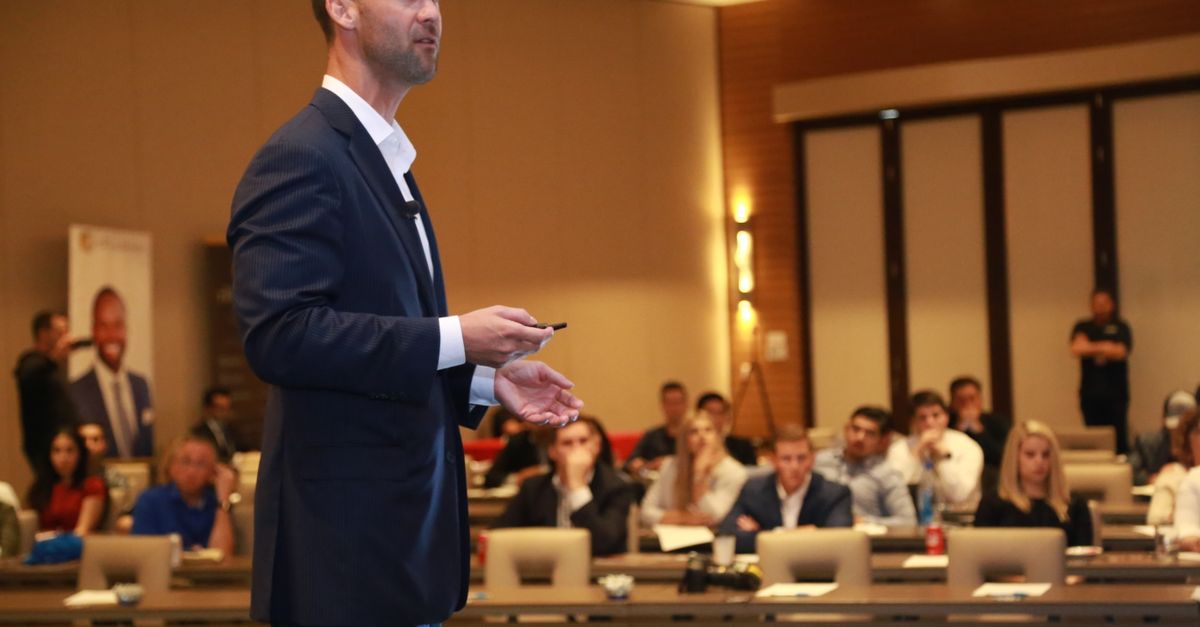
What a Leadership Keynote Speaker in Mexico Does
A leadership keynote speaker in Mexico is a professional who specializes in sharing knowledge, methods and tools for developing management skills and leading teams, working in corporate, educational or institutional settings across Mexico. Unlike a generic motivational speaker, a leadership speaker bases their work on validated theoretical frameworks (such as situational leadership, applied emotional intelligence or behavioral engineering) and steers the content toward measurable organizational results. In Mexico this profile has gained relevance as companies prioritize developing their management ranks as a competitive advantage in increasingly complex markets.
The Context of Corporate Leadership in Mexico
Mexico holds a particular place in the Latin American landscape of organizational development. According to the Mexican Institute for Competitiveness (IMCO), labor productivity in the country is directly linked to the quality of leadership in middle and senior management. However, a Deloitte Mexico survey (2023) found that 67% of executives believe their organizations have a significant gap in leadership competencies.
This gap has driven growing demand for specialized training that goes beyond internal courses: leadership talks, intensive workshops and executive training programs have become standard tools for companies of every size. Cities such as Mexico City, Monterrey, Guadalajara and Querétaro concentrate most of the activity in this sector, although the COVID-19 pandemic accelerated the adoption of virtual and hybrid formats across the country.
Professional Profile of a Leadership Speaker in Mexico
Education and Experience
The typical profile of a leadership speaker in Mexico combines academic training in areas such as organizational psychology, business administration, applied neuroscience or behavioral science with direct experience in corporate settings. The most sought-after speakers usually have:
- Graduate degrees in leadership, executive coaching or organizational psychology
- At least five to ten years of experience in management positions or consulting
- Recognized international certifications (ICF, DDI, CCL, among others)
- Publications, research or participation in academic and business forums
- A documented track record of work with medium and large companies
Specific Communication Skills
Beyond subject knowledge, an effective leadership speaker in Mexico needs specific communication skills. The ability to turn complex conceptual frameworks into concrete, applicable experiences is essential. This includes structured storytelling, facilitating group activities, instructional design and adapting content to different levels of seniority within the same audience.
The Mexican cultural context also requires sensitivity to particular organizational dynamics: the importance of interpersonal relationships (personalismo), formal hierarchy and the handling of respect in top-down communication are elements an external speaker must take into account for the message to be relevant and lasting.
The Most In-Demand Types of Leadership Talks in Mexico
The Mexican market for leadership talks is not uniform. There are different formats and topics that respond to specific organizational needs. The most common are described below:
1. Transformational Leadership
Based on James MacGregor Burns's model and later developed by Bernard Bass, transformational leadership is one of the most requested frameworks in Mexico. It focuses on how leaders inspire genuine change in their teams through shared vision, intrinsic motivation and individual development. Talks on this topic are especially common during corporate culture transformations.
2. Emotional Intelligence and Leadership
Daniel Goleman's model, which identifies five core components of emotional intelligence (self-awareness, self-regulation, motivation, empathy and social skills), remains one of the most requested in the Mexican corporate world. Talks in this area cover how leaders can manage their own emotions and those of their teams to improve performance and reduce turnover.
3. Leadership and Change Management
In a context of accelerated digital transformation, many Mexican organizations look for talks that help their leaders manage resistance to change, communicate visions of the future and keep their teams engaged through periods of uncertainty. John Kotter's eight-step model for organizational change is frequently cited in these interventions.
4. Neuroleadership
Neuroleadership, a term coined by David Rock and Jeffrey Schwartz, is an emerging discipline that applies neuroscience findings to leader development. In Mexico, this approach has gained traction especially among technology, financial and pharmaceutical companies that want to ground their leadership programs in scientific evidence.
5. Leading High-Performance Teams
Aimed at leaders who manage teams with ambitious goals, this type of talk covers building trust, managing constructive conflict, effective delegation and data-based feedback. Patrick Lencioni's model of the five dysfunctions of a team is a frequent reference.
Criteria for Choosing a Leadership Speaker in Mexico
Choosing a leadership speaker directly affects the return on investment of training programs. These are the most relevant criteria HR and Organizational Development teams should consider:
- Alignment with organizational goals: the content of the talk should connect with the concrete challenges the organization faces, not be generic content applied to any audience.
- Evidence-based method: check whether the speaker uses recognized theoretical frameworks and can cite research or studies that back up their ideas.
- Experience in the specific sector: a speaker with a background in the client's industry better understands the sector's language, challenges and organizational culture.
- Ability to customize: the best speakers carry out a prior assessment with the client to adapt the content, examples and activities to the audience's particular context.
- Appropriate format and length: not every need is met with a 60-minute keynote. Check whether the provider also offers workshops, modular programs or post-talk support.
- Verifiable references: ask for testimonials from previous clients, ideally companies of the same sector or size, and make sure the references can be contacted.
- Impact metrics: ask how the speaker measures the effect of their work: satisfaction surveys, learning assessments, behavior change or impact on business indicators.
Comparison Table: Types of Leadership Intervention
| Type of intervention | Typical length | Main objective | Customization | Impact measurement |
|---|---|---|---|---|
| Keynote talk | 60-90 minutes | Inspire, raise awareness | Low to medium | Satisfaction survey |
| Intensive workshop | 4-8 hours | Develop specific skills | Medium to high | Pre/post assessment |
| Modular program | 4-12 weeks | Sustained behavior change | High | Performance KPIs |
| Congress keynote | 30-60 minutes | Present trends, motivate | Low | Reach and recall |
| Executive retreat | 1-3 days | Strategic alignment and cohesion | High | Action plans and follow-up |
| Virtual talk | 45-90 minutes | Accessibility, scale | Medium | Participation and digital evaluation |
The Leadership Speaker Market in Mexico: Characteristics and Trends
Market Segments
The leadership speaker market in Mexico can be divided into three broad categories by type of provider:
- Independent speakers: professionals who work on their own, usually with a specific topic and a client network built over years. Their main advantage is flexibility and direct access to the expert; their limitation can be the capacity to scale complex interventions.
- Speaker and conference agencies: platforms that represent multiple speakers and make hiring easier. They offer a variety of profiles and handle logistics, although the level of customization may be lower than with a specialist hired directly.
- Consulting and organizational development firms: companies that build talks into broader cultural transformation or talent development programs. This model allows deeper impact and measurement of results, although it involves a larger investment.
Current Trends in Mexico (2024)
Several trends are reshaping the market for leadership talks in Mexico in 2024:
- Inclusive leadership and diversity: multinational companies and organizations with ESG commitments are asking for content on inclusive leadership, managing generational diversity and gender equity in leadership.
- Leadership in hybrid work: managing geographically distributed teams, asynchronous communication and maintaining organizational culture in hybrid settings are in high demand.
- Leader well-being and mental health: there is growing demand for content on executive burnout, resilience and self-care strategies as an integral part of leadership development.
- Leadership and technology: the adoption of artificial intelligence in business processes is driving demand for talks on leading teams through accelerated technological change.
- Short formats and microlearning: many organizations prefer more frequent, shorter interventions (20 to 45 minutes) built into team meetings or digital learning platforms instead of full-day events.
The Difference Between a Leadership Speaker and an Executive Coach
The Mexican market often confuses the role of the leadership speaker with that of the executive coach. Although both contribute to leader development, their methods, scope and formats are fundamentally different:
- Leadership speaker: works with group audiences (from 20 to thousands of people), shares knowledge and frameworks, prompts collective reflection and offers applicable tools. Their impact is broader but less deep at the individual level.
- Executive coach: works in individual sessions or with very small groups, facilitating self-knowledge and the development of specific skills through questions and guided reflection. Their impact is deeper on the personal level but more limited in scale.
Many organizations combine both approaches: a leadership talk to raise awareness across the organization and executive coaching for the leaders with the greatest strategic impact.
Prices and Investment Ranges in Mexico
The fees of a leadership speaker in Mexico vary significantly with profile, track record, format and length. As a general reference, the 2024 market works roughly within these ranges:
- Emerging or regional speakers: between $15,000 and $40,000 MXN per 60- to 90-minute talk.
- Established speakers with a national presence: between $40,000 and $120,000 MXN per keynote.
- Speakers with an international profile or high media recognition: between $120,000 and $500,000 MXN or more per engagement.
- Modular programs or full-day workshops: the cost depends on the depth of customization, group size and materials included, but can range from $80,000 to $300,000 MXN.
Price alone is not an indicator of quality or relevance for a specific organization. A talk well aligned with the company's goals and suitably customized can have more impact than an expensive but generic intervention.
How to Evaluate the Impact of a Leadership Talk
One of the most frequent challenges in corporate training in Mexico is measuring the real impact of leadership interventions. The Kirkpatrick evaluation model, widely used in the field, proposes four levels of analysis:
- Reaction: how participants perceived the talk, typically measured with satisfaction surveys at the end of the event.
- Learning: what new knowledge, skills or attitudes participants acquired, which requires assessments before and after the intervention.
- Behavior: whether participants are applying what they learned in their daily work, which requires observation and follow-up over time.
- Results: what impact the intervention had on concrete business indicators such as turnover, productivity, customer satisfaction or organizational climate.
Most keynotes only allow the first two levels to be measured reliably. Reaching levels three and four requires a support program that goes beyond the one-off talk and includes follow-up, reinforcement and practical application.
Sectors in Mexico with the Highest Demand for Leadership Talks
Although demand for leadership talks exists in virtually every sector of the Mexican economy, some industries are especially active:
- Pharmaceuticals and medical devices: the need to lead teams of scientific representatives and manage regulatory change creates high demand for leadership training.
- Financial services and banking: digital transformation and changes in the customer service model drive training in change leadership.
- Manufacturing and automotive: especially in the Bajío region and northern Mexico, managing teams in production plants requires solid operational leadership.
- Technology and startups: managing young, highly qualified talent with high expectations of autonomy poses specific leadership challenges.
- Retail and consumer goods: supervising teams spread across many points of sale requires remote leadership and culture management.
- Healthcare: hospitals, clinics and laboratories need clinical leadership and management of multidisciplinary teams.
How Leaderlix Approaches Leadership Talks in Mexico
Leaderlix, through its Leaderlix Teams business unit, designs and delivers leadership talks and development programs using the principles of Behavioral Engineering, a discipline that analyzes the environmental, cognitive and motivational factors that determine human behavior in organizations. Unlike purely inspirational approaches, Leaderlix starts with an assessment of the conditions that hold back or enable leaders' performance, then designs interventions with impact metrics defined from the outset. Founded by Gerardo Betancourt, a former TED Ambassador, the firm operates in 21 countries and has worked with organizations in the pharmaceutical, financial, technology and consumer sectors in Mexico and Latin America.
Frequently Asked Questions About Leadership Speakers in Mexico
How far in advance should you book a leadership speaker?
In-demand speakers in Mexico usually have their calendars booked three to six months ahead, especially for events in the last quarter of the year. To ensure availability and enough time for customization, it is advisable to start the selection and hiring process at least eight weeks ahead for standard talks and four to six months ahead for modular programs or complex interventions.
What sets a good leadership speaker apart from an average one?
What distinguishes the most impactful leadership speakers in Mexico is the ability to adapt the talk to the hiring organization's specific context, the use of data and evidence to support their ideas, the ability to generate genuine reflection rather than mere entertainment, and concrete tools participants can apply immediately at work.
Is an in-person or virtual talk better for leadership topics?
Both formats have specific advantages. In person favors interpersonal connection, experiential activities and sustained attention. Virtual allows greater geographic reach, lower logistics costs and the use of interactive digital resources. For leadership topics that involve deep emotional work or building group trust, in person is usually more effective. For general awareness or updating knowledge, virtual is equally valid.
Can a single talk produce lasting behavior change?
Research in the psychology of learning consistently shows that an isolated intervention without follow-up or reinforcement produces limited, short-lived behavior change. Lasting change in how leaders behave requires a program with multiple touchpoints, deliberate practice, feedback and accountability mechanisms. A talk can be a valuable starting point, but it is rarely enough on its own.
Conclusion: Essential Criteria for an Informed Decision
Choosing a leadership keynote speaker in Mexico deserves the same rigor as any other strategic investment in talent. The decisive factors are methodological alignment with the organization's goals, the ability to customize the content, the speaker's academic and professional credibility and mechanisms to measure the impact of the intervention beyond attendees' immediate satisfaction.
The Mexican market offers a considerable variety of profiles and proposals. The key is to look past media popularity or the speaker's charisma and assess objectively whether the proposed intervention can make a verifiable contribution to leaders' development and the organization's performance.